Thanjavur Unveiled: A Journey Through Tamil Nadu’s Cultural Crown
Discover the soul of Tamil Nadu in Thanjavur—where ancient temples whisper stories of dynasties, palaces echo royal grandeur, and vibrant art breathes life into tradition. This guide takes you through the top tourist gems that make Thanjavur a must-visit destination for history buffs, spiritual seekers, and culture lovers alike.
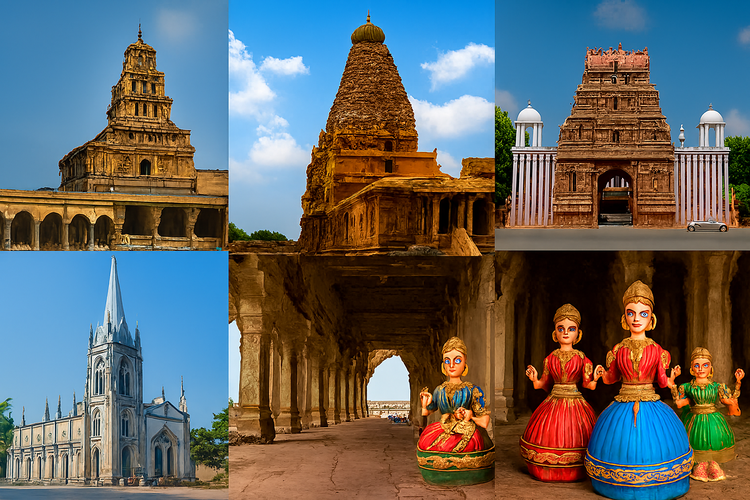
Exploring Thanjavur's Unique Culture
Thanjavur is famed for its Tanjore paintings, classical Carnatic music, Bharatanatyam dance, and colorful handicrafts—making for a vibrant cultural journey. Local festivals, traditional dolls, and authentic South Indian cuisine provide a captivating taste of life in Tamil Nadu’s historic heartland.
🛕 1. Brihadeeswarar Temple – The Big Temple That Touches the Sky
This UNESCO World Heritage Site, built by Chola king Rajaraja I in the 11th century, is admired for its Tamilian architecture, massive domes, and striking sculptures.
- Built by Raja Raja Chola I in the 11th century
- UNESCO World Heritage Site
- Towering 216-foot vimana carved from granite
- Nandi statue carved from a single stone
- Intricate frescoes and Chola-era inscriptions
🏰 2. Thanjavur Maratha Palace – Echoes of Royal Legacy
Built by the Nayaks and expanded by the Marathas, the palace complex boasts grand halls, sprawling courtyards, and stunning towers. Don’t miss the Durbar Hall and the Arsenal Tower, which offers magnificent city views.
- Home to the Bhonsle Maratha rulers
- Includes the Saraswathi Mahal Library (one of Asia’s oldest)
- Art Gallery with bronze and stone sculptures
- Towering bell tower and secret underground passages
🚪 3. Rajagopuram Gate – The Grand Gateway to Devotion
The Rajagopuram Gate is the grand entrance tower, or gateway, to the Brihadeeswarar Temple in Thanjavur. This majestic gateway symbolizes the divine threshold through which devotees pass to enter sacred space. Architecturally large and richly decorated, the Rajagopuram is composed of multiple tiers tapering upwards and adorned with intricate sculptures depicting Hindu deities and mythological scenes. It stands as a spectacle of devotion and artistry, serving both as a protective gate and a monumental symbol of the temple's spiritual significance.
- Ornate temple entrance with red-white stripes
- Traditional Dravidian architecture
- Serves as a symbolic welcome to Thanjavur’s spiritual heart
🪆 4. Thanjavur Dolls – Dancing Icons of Tamil Craftsmanship
Thanjavur Dolls, also known as Tanjore Dancing Dolls or Thanjavur Thalayatti Bommai, are iconic traditional bobblehead or roly-poly dolls crafted primarily from terracotta clay. These dolls are distinguished by their unique design that allows their heads, hands, and bodies to move, creating a dance-like swaying motion reminiscent of classical Indian dance forms like Bharatanatyam, Kathakali, and Manipuri. Originating around the 17th century during the reign of Maratha ruler King Serfoji II, these dolls were initially decorative pieces for royal courts and have since become a celebrated symbol of Tamil craftsmanship and cultural heritage.
The dolls are meticulously handmade and hand-painted, often adorned in vibrant colors and intricate details that reflect the rich artistic traditions of Thanjavur. They are typically displayed during the Navratri festival as part of "Golu" arrangements and valued both as decorative art and cultural artifacts. The craftsmanship includes balancing the center of gravity to enable smooth oscillations, which creates the mesmerizing "dancing" effect that gives these dolls their charm. Materials have evolved from pure terracotta to lightweight alternatives like paper mache and plaster of Paris to improve durability while preserving traditional aesthetics.
Thanjavur Dolls represent a living legacy of Indian art, combining history, religion, dance, and craftsmanship into a graceful moving icon cherished across generations and households in Tamil Nadu.
- Hand-painted bobblehead dolls (Thanjavur Thalaiyatti Bommai)
- Made from terracotta and papier-mâché
- Symbol of Tamil folk art and heritage
- Popular souvenirs and cultural gifts
⛪ 5. St. Peter’s Church – Serenity in Stone
A historic Christian landmark built in the 18th century, it reflects the multicultural history of Thanjavur.
- Built in the 18th century by Christian missionaries
- Gothic-style architecture with pointed arches and spires
- Peaceful ambience and stained-glass windows
- A quiet retreat from the bustling city
📚 6. Saraswathi Mahal Library – A Time Capsule of Knowledge
Located within the palace complex, this is one of Asia’s oldest libraries and houses palm-leaf manuscripts, rare books, ancient maps, and historical documents.
- Over 49,000 rare manuscripts in Tamil, Sanskrit, and other languages
- Palm-leaf manuscripts and ancient texts
- Established during the Nayak rule
- A haven for researchers and history enthusiasts
🎨 7. Thanjavur Art Gallery – Bronze Beauties & Stone Stories
The Thanjavur Art Gallery, officially called the Raja Raja Chola Art Gallery and locally known as Thanjavur Kalaikoodam, is a prestigious museum located within the Thanjavur Palace complex. This gallery houses an exquisite collection of bronze sculptures, stone carvings, and artifacts primarily from the Chola period (9th to 13th century), along with pieces from the post-Chola Nayak and Pallava periods. The collection includes finely crafted bronze icons of Hindu gods and goddesses, depicting intricate details of their attire, ornaments, and posture, illustrating the apex of Chola metal craftsmanship.
The gallery is situated inside the former royal Durbar Hall, which is adorned with beautiful paintings and sculptures on the walls and ceiling, enhancing its historic ambiance. Apart from bronzes, the gallery also features rare ancient coins, stone sculptures arranged in the entrance hall, and Tanjore glass paintings, all reflecting the rich cultural and religious heritage of Thanjavur.
Visitors to the art gallery can experience a journey through centuries of Tamil Nadu's artistic excellence, with the bell tower nearby offering panoramic views of Thanjavur town. The Thanjavur Art Gallery is a vital destination for anyone interested in South Indian art, history, and architecture.
- Located inside the palace complex
- Chola bronze statues and South Indian sculptures
- Depicts Hindu deities and mythological scenes
- A visual feast for art lovers
🌾 8. Punnainallur Mariamman Temple – Divine Grace Amidst Greenery
The Punnainallur Mariamman Temple, located about 6-7 kilometers from Thanjavur in Tamil Nadu, is a revered Hindu temple dedicated to Goddess Mariamman, a manifestation of the goddess Parvati associated with rain, fertility, and healing. The temple was constructed in the late 17th century by the Maratha ruler Venkoji Maharaja Bhonsle, who is said to have installed the idol after a divine vision in a dream led him to find the goddess’s statue in a forest of Punnai trees.
The temple is renowned for its beautiful Dravidian architecture, featuring intricately carved pillars, towering gopurams (gateway towers), and ornate mandapams (pavilions). The deity, believed to be self-manifested and originally in the form of an anthill, is adorned with gold and jewels and considered to possess healing powers, especially for skin ailments and eye diseases. A famous legend states that the daughter of King Tulaja regained her eyesight through prayers at this temple.
The temple's serene location amidst greenery and its spiritual ambiance attract devotees from various faiths year-round. It is especially crowded during festivals like Navaratri and Aadi Perukku, during which elaborate rituals and processions take place. The temple's significance is heightened by its connections to historical Maratha rulers who were patrons of the site, maintaining and enhancing its sacred architecture.
- Dedicated to Goddess Mariamman
- Known for healing powers and local devotion
- Peaceful temple surrounded by lush fields
- Hosts vibrant festivals and rituals
“Whether you're tracing the footsteps of Chola kings or admiring the sway of Thanjavur dolls, this city leaves you with more than memories—it leaves you with meaning.”